Four ways i3 changes behavior at the bedside
Built around the way clinical teams actually work: instant, visual, and impossible to ignore.
|
|
|
|
|
Real-Time Visibility |
Behavior Change |
Team Awareness |
Long-Term Insight |
| A live dose-rate bar gives staff a continuous read of exposure as it happens, not days later in a report. | Color-coded feedback nudges staff to adjust positioning, distance and shielding the moment it matters. | The real-time display makes exposure visible to everyone in the room, turning dose into a team conversation. | Historical dose insights reveal trends over time, supporting continuous improvement, training and protocol refinement. |
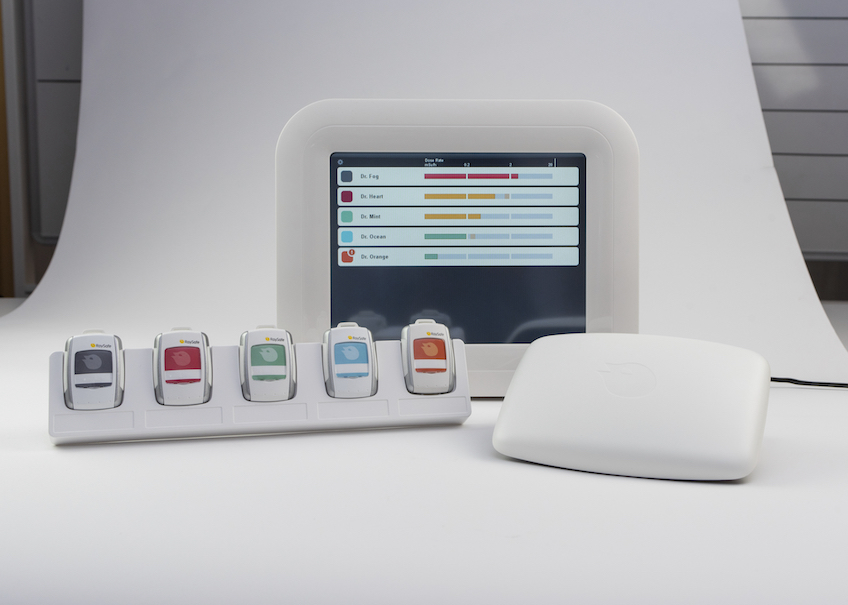
The RaySafe i3 system: personal dosimeters paired with a wireless real-time display, showing every team member's live dose-rate at a glance.
Adjust. Check. Learn.
A simple loop the whole team can adopt from day one.
|
1
|
2
|
3
|
4
|
Wear the dosimeter |
See dose in real time |
Adjust on the spot |
Learn from the data |
| Lightweight personal dosimeter worn at chest level, no extra steps to your workflow. | Wireless real-time display shows live dose-rate as you work, with clear color zones. | Reposition, step back, or check shielding the moment exposure spikes. | Review historical dose data after each procedure to support coaching, training and continuous improvement. |
IN THE ROOM
Live dose, right where the work happens
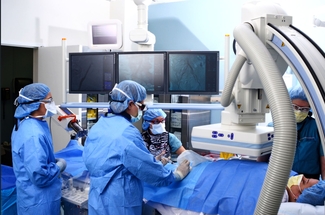
The wireless real-time display sits inside the interventional suite, turning radiation from an invisible risk into a shared signal the whole team can act on, procedure by procedure.
Proven in real clinical environments
From interventional suites to cath labs, RaySafe i3 has helped teams measurably reduce their exposure.
−60%Operator dose reduction · Sendai Kosei Hospital Behavior change, measuredAfter deploying i3 in interventional procedures, the team documented a sustained drop in operator exposure driven by real-time awareness and protocol refinement. |
Up to 90%Scatter reduction · Egg Medical + RaySafe i3 Shielding you can actually verifyPairing the EggNest shielding system with i3 real-time feedback let clinicians confirm, live, that protective measures were working as intended. |
~60%Lower staff dose · Journal of Invasive Cardiology Visibility alone changed behaviorA German cath lab tracked operators and assisting nurses for 72 days using RaySafe i3. When the team could see dose in real time, exposure fell roughly 60% across every team member — with no change in fluoroscopy time, dose-area product, or patient mix. They used the same shielding they already had, only better. |
For the people who can't avoid radiation
And for the leaders responsible for keeping them safe.
|
|
|
|
Interventional Clinicians |
Radiation Safety Officers |
Department Leaders |
| Cardiologists, radiologists, surgeons and other supporting staff working under fluoroscopy who need live feedback during long procedures. | RSOs and medical physicists who need defensible data to drive ALARA programs and compliance. | Cath lab, IR and OR managers building a culture of safety that staff actually engage with. |
Advised for routine use
Real-time dosimetry has moved from best practice to expected practice.
The source · SCAI · ASE · HRS · SIR · SVS
“Real-time dosimetry is strongly advised”Leading cardiac and vascular societies just raised the bar for fluoroscopy safety. Their consensus statement says relying on lead aprons and operator-positioned shields alone is no longer an acceptable standard of care, and strongly advises real-time dosimetry for routine use. The payoff? When clinicians can see their dose as it happens, operator exposure drops by roughly six-fold. Read the full statement to understand why the standard is changing now.
|
|
|---|---|
|
|
 |
From RaySafe
Real-time staff dose monitoringOur white paper sets out the immediate and long-term ways to reduce medical radiation risk, and why meeting regulations alone is no longer sufficient:
|
What clinicians say about RaySafe i3
Voices from the teams using real-time dosimetry every day.
“The improvement in radiation protection has been more than dramatic at the URMC. There is no substitute for a constant and real-time reminder of the dose being received.”Labib H. Syed, M.D., M.P.H. |
“We feel better about our work and our safety. Now that we see what RaySafe real-time dosimetry does for us, we wouldn’t want to work at a place that doesn’t have it.”Dawn Dowling, Technologist |